
Keynote Speakers
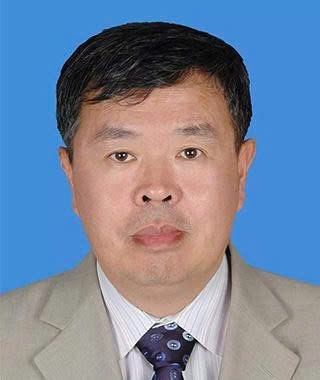
JOSHUA ZHEXUE HUANG
Academician of Russian Academy of Engineering
Dr. Joshua Zhexue Huang, Academician of Russian Academy of Engineering, is a Distinguished Professor at the College of Computer Science and Software Engineering, Shenzhen University, and the Founding Director of the Big Data Institute. He currently serves as Chief Scientist of the Greater Bay Area Ascend Computing Application Innovation Research Institute at the Guangdong Laboratory of Artificial Intelligence and Digital Economy (Shenzhen), and as Deputy Director of the National Engineering Laboratory for Big Data System Computing Technology.
A pioneer in data mining, Prof. Huang is renowned for developing influential clustering algorithms, including k-modes, fuzzy k-modes, k-prototypes, and w-k-means, which are widely cited and integrated into commercial software. His research spans business intelligence, data mining, and big data analytics, with extensive industry consulting experience across Australia, Hong Kong, Taiwan, and mainland China.
Dr. Huang holds a PhD from the Royal Institute of Technology (Sweden) and has published over 400 research papers with 20,000+ citations. In 2006, he received the inaugural PAKDD Most Influential Paper Award. A globally recognized leader, he has chaired multiple international conferences and is listed among Stanford University's top 2% career-impact scientists and Elsevier's Highly Cited Chinese Researchers.
Big Data Analytics for Multi-Cloud Data Centers
With the continuous aggregation of computing and storage resources in cloud environments, modern enterprises increasingly deploy data storage and management across geographically distributed multi-cloud data centers. This paradigm enables data to be stored in proximity to its collection and application scenarios, delivering prominent geographic deployment advantages. However, it poses substantial challenges for holistic big data analytics. Specifically, comprehensive analysis of fragmented datasets across multiple data centers—such as machine learning-based predictive modeling—mandates cross-center data aggregation to a single node for centralized computation. This limitation stems from conventional big data frameworks, including Hadoop MapReduce and Spark, which are inherently designed for single-cloud deployment.
This talk presents LOGO, a non-MapReduce computing framework that supports parallel execution of sequential iterative algorithms on distributed infrastructures with zero inter-node data communication. The LOGO framework significantly enhances the computational efficiency and data scalability of iterative algorithms. It also enables the direct deployment of sophisticated iterative algorithms on distributed platforms without mandatory MapReduce-based code refactoring. Furthermore, this study proposes a novel architecture for cross-multi-cloud distributed big data computing and develops Octopus, a dedicated software system implemented based on the proposed architecture.
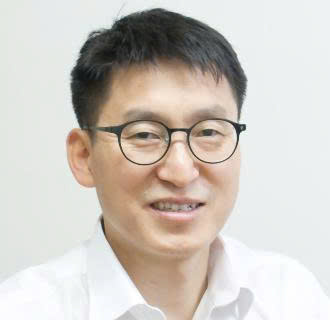
KANG-HUYN JO
Computer Engineering at the University of Ulsan
Prof. Kanghyun Jo graduated from Busan National University and an MS and PhD. with Computer Vision from Osaka University. Since 1998, he has been a professor in the Dept. of Electrical, Electronics, and Computer Engineering at the University of Ulsan, where he leads various industry-academic collaborations and international academic activities.
His work focuses on real time computer vision and deep learning for object recognition, action and facial expression analysis, and safety surveillance in autonomous driving. He pioneered lightweight deep learning models on embedded systems and multi sensor fusion techniques for precise vehicle and pedestrian tracking. He has also led major projects such as the development of a plastic waste recognition model, an early childhood plays evaluation platform, a digital mathematics play app, and digital twin platforms for wastewater treatment plants and campus infrastructure.
Currently, he develops AI algorithms for citywide traffic and infrastructure data analysis, and constructs digital twin models integrating real-time sensor and image data to optimize traffic management and emergency response. In addition, he is conducting research on unmanned and large-scaled manufacturing environments by fusing 4D radar and camera sensors, establishing key technologies for smart city and intelligent industrial automation.
He had been involved in organizing many international conferences under IEEE IES (industrial electronics society) where he has been worked as AdCom Members and committee members, for example, ISIE, IECON, INDIN, ICIT, HSI, and IWIS. Among them, he recently has been managing the conferences, to name a few IEEE ISIE2024, HSI2025 and IWIS2025 as an organizing chair, in his town, Ulsan. He is also scheduled to host IWIS 2026 during Aug. 9 ~ 12, 2026.
Sensor fusion based ambient understanding for wider and unstructured environment
Ambient understanding in unstructured environments is a critical topic in the field of autonomous systems. This wider measurement and understanding work is widely applied to autonomous driving, smart construction, and robotic excavation. However, many challenges had been existed in developing and optimizing perception systems with respect to severe weather conditions, heavy dust environment, and the high cost of traditional LiDAR sensors. This speech focuses on the recent transition from LiDAR-based systems to 4D Radar and Camera fusion technologies. It introduces our advanced algorithms for 3D object detection and SLAM that utilize 4D Radar to overcome environmental limitations in both autonomous driving and excavator operations. Also, it covers the related research and recent projects especially on the sensor fusion systems developed by the team of Intelligent Systems Laboratory (ISLab), Department of Electrical, Electronics and Computer Engineering, University of Ulsan, Ulsan, Korea.
Prof. Dr.-Ing. habil. Dr. h.c. Herwig Unger
Computer Engineering at the University of Hagen, Germany
Prof. Dr.-Ing. habil. Dr. h.c. Herwig Unger (*1966) received his PhD with a work on Petri Net transformation in 1994 from the Technical University of Ilmenau and his doctorate (habilitation) with a work on a fully decentralised web operating systems from the University of Rostock in 2000. Since 2006, he is a full professor at the FernUniversität in Hagen and the head of the Department of Communication Networks. In 2019, he obtained honorary PhD in Information Technology from the King Mongkut's University of Technology in North Bangkok (Thailand). His research interests are in decentralised systems and self-organization, natural language processing, Big Data as well as large scale simulations. He has published more than 180 publications in refereed journals and conferences, published or edited more than 40 books and gave over 35 invited talks and lectures in over 15 countries. Beside various industrial cooperations, e.g. with Airbus Industries, he has been a guest researcher/professor at the ICSI Berkeley, University of Leipzig, Universitè de Montreal (Canada), Universidad de Guadalajara (Mexico), Okayama University (Japan) and the King Mongkut's University of Technology North Bangkok.
Cortical Computing: Hierarchical Sequence Prediction for Explainable Natural Language Processing
Contemporary transformer-based NLP often relies on complex learning algorithms using high computational power with significant energy use and offline training processes. This presentation introduces the GraphLearner, a brain-inspired architecture based on cortical sequence memory principles. The GraphLearner uses simple neural columns that learn invariant pattern representations via Hebbian plasticity, while horizontal connections link columns into hierarchical sequences—from letters and syllables to words and semantic sentence units. The model supports instantaneous, one-shot learning without offline training, exhibits inherent explainability through localized activation, and enables planning by deriving action paths from learned sequence graphs. This cortical computing approach may offer a transparent and neuroplausible alternative for hierarchical sequence prediction in natural language processing and may give a chance for semantic understanding as well as abstraction and generalization.
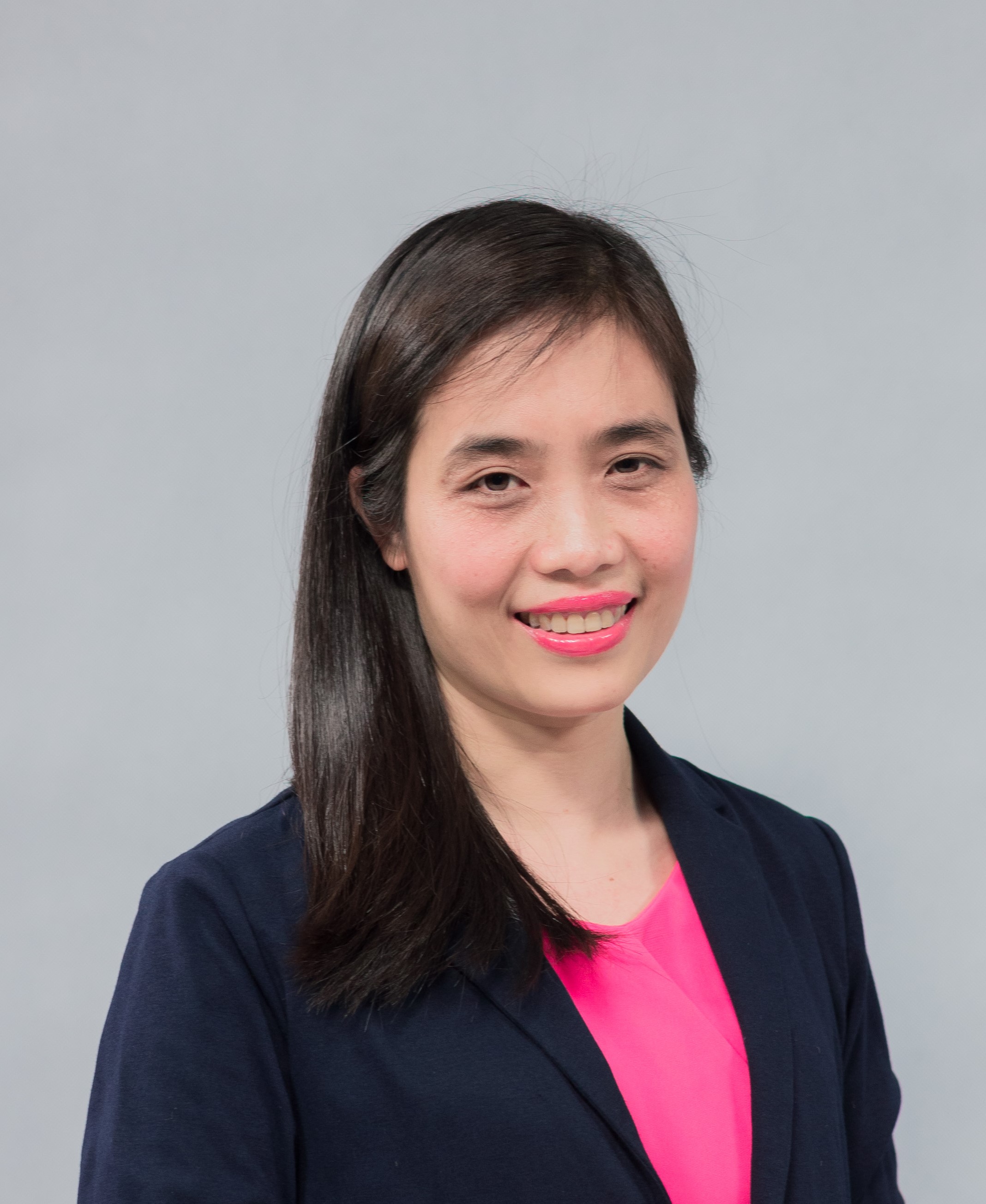
Prof. Huynh Thi Thanh Binh
Hanoi University of Science and Technology, Vietnam
Huynh Thi Thanh Binh is Professor and Vice Dean of the School of Information and Communication Technology (SoICT), Hanoi University of Science and Technology (HUST). She is Head of Optimization Group. She is Chair of the Science Committee on Computer Science and Information Technology (2025-2027), The National Foundation for Science and Technology Development – NAFOSTED. Her current research interests: Artificial Intelligence, Algorithms and Optimization, Computational Intelligence, Memetic Computing, Evolutionary Multitasking. She has published more than 150 refereed academic papers/articles. She is Associate Editor of the Swarm and Evolutionary Computation (2024 – now), Engineering Applications of Artificial Intelligence Journal (2021-now), IEEE Transactions on Emerging Topics in Computational Intelligence (2022-now). She has served as a regular reviewer, a program committee member of numerous prestigious academic journals and conferences, such as Transactions on Evolutionary Computation, Swarm and Evolutionary Computation, Applied Soft Computing, Information Sciences, Memetic Computing, Congress on Evolutionary Computation (CEC), The Genetic and Evolutionary Computation Conference (GECCO), NeurIPS…
In the last 5 years, Assoc. Prof. Binh and her research team are one of seven research groups in the world that have contributed the most in the fields of Multi-task Optimization and Multi-task Evolutionary Computing. Her team won the first prize at Competitions at GECCO 2025, GECCO 2024, WCCI 2018, WCCO 2020, WCCI 2022, CEC 2021.
She is PI of the projects funded by NAFOSTED, bi-laterial Vietnam – Germany, Vingroup Innovation Foundation, US Army Research Lab, ONR…
She is Chair of IEEE Vietnam section, IEEE Computational Intelligence Society Vietnam Chapter (IEEE Vietnam CIS), Executive member of IEEE Asia Pacific.
Evolutionary Multitasking: Recent Advances, Applications, and Open Challenges
Evolutionary multitasking optimization is a cutting-edge topic in the field of computational intelligence that merges evolutionary computation and multitasking methodologies to address multiple optimization problems concurrently. By exploiting potential complementarities among related tasks, evolutionary multitasking enables the transfer of useful knowledge across tasks, thereby enhancing search efficiency, solution quality, and computational resource utilization.
This talk will introduce the fundamental concepts and key principles of evolutionary multitasking optimization, with an emphasis on recent methodological advances and practical applications. In particular, the talk will discuss how different tasks can be represented, how knowledge can be shared effectively, and how transfer mechanisms can be designed to avoid negative transfer in multitasking environments.
Several representative algorithmic frameworks will be presented, including unified encoding, task assignment, inter-task knowledge transfer, and adaptive transfer strategies. The talk will also highlight the practical value of evolutionary multitasking in solving complex real-world optimization problems, where multiple related tasks often arise naturally.
Through selected application examples and benchmark studies, the effectiveness of evolutionary multitasking algorithms will be demonstrated and analyzed.